Wednesday, April 6, 2011

Red Headed Woodpeckers Flying

It is Spring Break, and I'm looking out the window in the morning when I'd usually be at school. Across the street, I saw three red headed woodpeckers flying from one tree to the next. We've written about the pileated woodpeckers, that was our first one, and downy woodpeckers before. We frequently see downy woodpeckers in our neighborhood, but not too many other kinds.

We learned that they are very aggressive birds. They will steal eggs from other birds. They will destroy other birds' nests. They will attack birds to keep them away from their territory.

Red headed woodpeckers are the most omnivorous woodpeckers. Omnivorous means that they eat meat and plants. They will eat seeds, mice, bugs, baby birds, and bird eggs. They hide their food. They will often store grasshoppers ALIVE. They will put them in crevice, which is a small place, so small that they can't escape.

They like to live in dead or dying trees. They lay 4-7 eggs, and the eggs are white color. The female and the male both take turns sitting on them. After 14 days, they hatch. The chicks will leave the nest about 30 days after the eggs have hatched.
This is their call.

Sunday, March 27, 2011

American Woodcocks

We went to a preserve with Junior Audubon Club to look for the American Woodcock. We wanted to see the American Woodcock doing its air and ground dance. The male does the dance to attract females. It was very freezing. The males don't care how cold it is, but they only do their dance almost at night. We saw the American Woodcock do its sky dance. It wasn't easy to see the whole time because it was dark and it flew very high. We got kind of close to it on the ground. We heard its "zzzzzt" call on the ground. It makes a fluttering sound when the air rushes through its wings after it takes off and it's flying. We learned that wolves, dogs, coyotes, hawks and owls will try to eat the eggs because the nest is on the ground, so a lot of animals can get to it. The color of the American Woodcock is a browny woody color because its nest is sometimes near trees and in the forest, and this color gives it camaflogue. You can't tell the difference between the male and the female.

We found more information at home. The American Woodcock is 11 inches in length and it has an 18 inch wingspan. Its beak is long for probing in soft (wet) dirt and eating insects. We could see its long bill. It eats earthworms, larvae, ants, slugs and snails.

The nest is simple. It is made of leaves. The female will sometimes line the rim of the nest with a few twigs. The female lays about four eggs at a time.

They arrive in Michigan in the spring. They stay in the summer and migrate to Tennessee, Arkansas, and the gulf states for the winter.

Here's a picture:These two sounds are exactly what we heard.

Saturday, January 29, 2011

Dark-eyed Juncos


We see Dark-eyed Juncos on our bird feeder frequently. We know they're dark-eyed juncos because of their markings. I recognized them from my reading.

Dark-eyed juncos are a kind of little cute sparrow. The males are black with a pink bill and a white breast. The females are brown with an orangy brown wing. They eat grasshoppers, ants, beetles, catepillars, spiders and weed seeds. They are omnivores. The eat more insects in the warmer months.

They live in cold places. The males winter more north than the females. They live in coniferous forests and places.

The nest is in a small bush or tree. The nest is in the shape of a cup. The nest is lined with grasses and fur.

They lay about 3-4 eggs at a time. The female eats the egg shells after the chicks hatch to help her produce more eggs and to help her replace the calcium she used in making the 3 or 4 eggs.

The baby chicks poop in little sacks made of edible sugar. After they poop in it, the parents will eat it! Gross! They stop eating it when the babies start producing harmful bacteria. Then, the dark-eyed juncos just throw it out of the nest!

Here is the call.

Tuesday, November 30, 2010

Purple Finches

Me and Jessica (one of my moms) went to Junior Audubon Club and saw a purple finch. Purple finches live in northern Michigan in the summer. They migrate to southern MI and the whole state in the winter. They live in mixed coniferous and deciduous forests and in coniferous forests. They can be seen at bird feeders in the winter, also. They eat beetles, bugs, spiders, caterpillars, box elder seeds, grapes, wild cherry and plum tree seeds. So, they are omnivores.

They usually lay 3 to 5 eggs. The mama sits on them for 12 to 14 days. Mother purple finch and the father purple finch both feed the chicks. The chicks eat regurgitated seeds.

The nests are built by the female purple finch. The nests are made of sticks, grasses, and leaves. They are in a small cup shape and they have deer fur, snowshoe hair or rabbit fur in them.

The males are the color of a raspberry fruit drink. Their head feathers can stick up straight. The females are brown with no red. The young look like the female.
The female is on the left, and the male is on the right. We also see an American Goldfinch in this picture!
The call can be found on this web page.

Thursday, November 25, 2010

Great Blue Heron


Happy Thanksgiving! Today we'll be blogging about the Great Blue Heron.

The Great Blue Heron is North America's largest heron. It is also one of the continent's most widespread wading birds. They can live in a lot of different habitats. They like to eat fish, frogs, reptiles, and rodents. They live near bodies of water like oceans, lakes, rivers, and marshlands.

They are usually not very loud except for breeding time or when a predator is near. During breeding time they have seven different calls. You can hear an example of their song here:
http://www.mbr-pwrc.usgs.gov/id/framlst/i1940id.html.

My friend Jax is blogging with me this week because Jill is cooking Thanksgiving dinner. The 8-Ball toy thinks that Jax is crazy.

That's all for this time.

Friday, November 19, 2010

All about tundra swans

Our friend Phillip asked us if hooded mergansers could be attracted to nest boxes. We found that they can. Here's some information. (Jill also found plans for building one online, and they are the same as plans for wood duck boxes).

We saw the tundra swans at the bird sanctuary. There are also trumpeter swans there. The difference between a trumpeter swan and a tundra swan is the shape of the bill and slight difference on the head. The bill on the tundra swan is more dish shaped and concave. The tundra swan usually has a yellow spot in front of the eye.

The tundra home--before it migrates for winter--of the tundra swan is a large stick nest lined with moss and grass. The tundra swan is very white. It breeds in the Arctic and migrates to North America for winter. The female lays four eggs, and the male guards the eggs. In the breeding season, it sleeps on land, but in the winter, they sleep on the water. They start flying with a running leap. While the swan's wings are flapping, it makes a whistling noise. It winters in large flocks. It eats aquatic plants, seeds, mollusks, arthropods, and grains.

It's call can be found here.

Sunday, November 7, 2010

We're Back! and Water Birds

Hello. We haven't blogged for a while. We've been busy. We have a new baby and we call her Trudy Bird. We haven't done much stuff at the bird banding station, but I've joined the Junior Audubon Club of Kalamazoo. We watch birds at different places around Kalamazoo.

We went to the Bird Sanctuary to look at water fowl. There are other birds there, like birds of prey, but we aren't going to write about them right now. We are writing about water birds.

We saw a hooded merganser. We had never seen one before. We learned that they are common in the Great Lakes Region. We live in the Great Lakes Region. We learned that they eat crayfish and small fish and crustaceans. They like forested wetlands and tidal creeks for winter. They lay 9-11 eggs. We thought the male looked very cool. Here's a picture:
We also found it's call. You can listen here.

Sunday, April 11, 2010

The World of Red Winged Blackbirds


Hello, readers. We are finally back. It's been winter and we've been busy at the start of spring. In winter, we mostly only saw black capped chickadees and cardinals, and we've already blogged about them. Now we'll blog more, now that it's spring, and in the summer. I joined the Junior Audubon Club, where we'll learn lots about birds and go bird watching. We'll bring binoculars and lots of stuff, and see lots of birds, and that's good for you, readers.

Yesterday on a hike, we saw a lot of birds, but the first one we're going to write about today is the red winged blackbird.

Red Winged Blackbirds are a very common Michigan bird. Their flocks for migrating have 10,000 birds. The females leave first, before the males. They migrate to South America and Mexico, and sometimes they don't go that far.
The live around wetlands. They eat grasshoppers, dragonflies, and seeds such as sunflower seeds. They eat other insects, too.
The eggs are about one inch long. The female has in her nest 3 or 4 at a time. She sits on the eggs for 11 days. The eggs are bluish green. Both parents feed the babies.

We got this information from Wild About Michigan Birds: A Youth's Guide to the Birds of Michigan by Adele Porter.

Here is it's call!

Here is a picture:

Wednesday, January 27, 2010

Birds from Birchbark House

We're reading The Birchbark House which is about a Native American family who lived at the same time as Laura Ingalls Wilder who wasn't that nice to people without white skin. We liked the Little House books, but we learned about how they used to treat Native Americans. We did NOT like that part.
Anyway, in The Birchbark House there are birds, and we thought we'd blog about them, so that's how it all came out. And what we're blogging about first is Golden Breasted Woodpecker. They live in Minnesota! That's where one of my moms used to live.

When we looked up the Golden Breasted Woodpecker, we couldn't find any information at first. Usually when we type in a bird name, we get a lot of information. We learned that the Golden Breasted Woodpecker is sometimes considered to be a Green-Barred Woodpecker. So, we're going to blog about that.

There are a lot of Green-Barred woodpecker calls on this page, and here's a link to it.

This bird is found in east and central South America. We had a hard time finding other information. We learned that sometimes research is easy and sometimes, it is hard! We'll try another bird in a few days!

Sunday, January 24, 2010

Birds are Living Dinosaurs

My friend Gracen asked us to research if birds are actually living dinosaurs. We googled it, and the Museum of Natural History said that many paleontologists (which are dinosaur scientists) think that birds are living dinosaurs. They think that because they have nesting, brooding, skeleton features, and maybe even feathers in common. Ornithologists which are bird scientists don't agree all the time with that.

This theory started because once, the archaeopteryx fossil was found. They thought it was a dinosaur until they saw the feather imprints. The archaeopteryx ha
s jaws and teeth like dinosaurs. Its skin was scaly like the dinosaurs. It had tiny limbs with three claws. It also had a long tail. All like dinosaurs. The only thing about the tail that was like a bird was that it was covered in feathers. The wings, the back of the neck and the top of the head were covered with feathers. Here is a picture of a fossil of an archaeopteryx. We think it should be called an Ardenopteryx. And, here is a link to archaeopteryx images. OK, Gracen, we did the research, you should come to our house now!

Monday, January 18, 2010

Winter Birds in Michigan

Sorry we haven't blogged in a while. I have school now, and we don't see as many birds because it's winter, and there aren't as many birds in the winter. We did put birdseed in a flat tin in the front yard for birds, and squirrels came!


Our friend Al got us a bird feeder for Christmas that we have to wait until the ground isn't frozen to put out.
We do see some birds like black capped chickadees, crows and northern cardinals. Here are some other birds that come to bird feeders in Michigan in the winter:
blue jays
American Crows
Black Capped Chickadees
Northern Cardinals
Downy Woodpeckers
Red Bellied Woodpecker
Tufted Titmice
White Breasted Nuthatch
European Starling
American Goldfinch
House Sparrow
Morning Dove

Since we've never written about European Starlings, we're gonna look it up.
The European Starling likes to sit on buildings, telephone wires, and parking lots. They probe the ground looking for food. They travel in flocks often with grackles, crows, and blackbirds. It is a medium sized bird with a pointed tail and short wings.
You can hear the call here.

Do you want us to learn about anything for you? If you do, leave a comment!


Thursday, December 10, 2009

Facts of the Harpy Eagle for Gracen


We decided to do this post because our friend Gracen sent us an email about Harpy Eagles. So, we found out more about them for him.


They don't live in North America. They live in southeastern Mexico, northern Argentina and southern Brazil.

The females are bigger than the males. They have a 6 1/2 foot wing span. A wing span is how long the wings are when they're stretched out both ways. They weigh between 10 and 20 pounds.

They strike their prey after pursuit among the trees. They eat sloths, monkeys, opossum and some reptiles and birds. They have rear facing talons with some as big as a grizzly bear's claw BUT the Harpy Eagle can only carry prey that is half of its weight.

They are endangered. The biggest threat is habitat loss and hunting.

Here are two pictures of Harpy Eagles.

Wednesday, November 25, 2009

The Downy Woodpecker Post

My mom, Jill, was in the backyard, and she saw a woodpecker. She took a picture of it, but she didn't know what it was. But, when I came home from school, I told her. We found out what it was by the internet. First, we thought it might be a redheaded woodpecker, but it didn't have red all over the head, so then we looked at downy, and it was JUST like downy. We know it is a male because it has red on the head. The females do not. We've seen a downy before in the net at the Nature Center when GranDaddy was here a long time ago. That was the first time we ever went to the bird banding station.

Facts we learned while making this post:
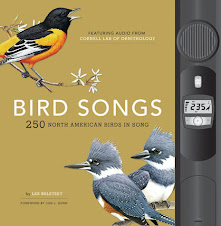
Today we are using my Bird Songs: 250 North American Birds in
Song book for information.
They are the smallest woodpecker in North America. There are lots of Downy Woodpeckers. They live in city forests and in wilderness forests. They live all over, and do not migrate. They eat insects.
This is the call.
This is a picture of a Downy Woodpecker that we got from my mom, Jill.

This is a picture of the downy woodpecker that we found on the internet.

Tuesday, November 24, 2009

Red Shouldered Hawk Facts


Yesterday, I was playing on the playground, and we saw two red shouldered hawks. They were soaring. And, we're not sure that they're red shouldered hawks, but we think they are because we heard the call. We knew the call because blue jays copy it and we've been hearing blue jays doing it, and we just knew the call. Here it is again.

Facts we learned while making this post:
5 day old red shouldered hawks can shoot their feces (which is their poop) over their nest. When you see a lot of bird poop on the ground, you know that you're close to an active nest.

They eat small mammals, reptiles, amphibians, birds and crayfish. They catch them by running or hopping after them on the ground or they drop on a prey from a perch high in a tree.

The female puts her nest high in the tree. She lays 2 to 5 eggs a year and sits on them for 33 days.

Here is a picture we found on the internet.

Wednesday, November 18, 2009

Arden and The Turkeys

My friend Chris has turkeys and I've tried to pet them and I never have. But I have pet one of her chickens, and I named it Silk Feathers with the nick name Silky. I named it Silk Feathers because its feathers felt like silk.
Here's a picture of me petting Silk Feathers.

Here are Chris' turkeys.

Here's the turkey I made for school.

Saturday, November 14, 2009

The Black Capped Chickadees

We're writing about black capped chickadees because we see them a lot in our yard. I know how to make the call. We'll record it in a minute, and then find a different kind
of call on the internet.
We're gonna learn about black capped
chickadees from our Michigan bird book.
Facts we learned while making this post:
*They are a permanent resident of Michigan. They survive the winter by snugging in nest boxes or nests with up to 50 other black capped chickadees. They lower their body temperature at night. This helps them use less energy, so they don't need to find food at night.
*The males and females look the same.
*They eat bugs all year long. In the winter, they eat some bugs, and an extra amount of seeds
and fat. They eat mostly bugs in spring, summer, and fall.
*They weigh as much as one quarter.
Here's the call that I recorded:

Here is a call we found. There are four calls on that page. They don't sound like our chickadees. I think that's interesting.
We're going to put pictures up that we took around our house, and then another picture that we found on the computer. 5 pictures and 5 calls!

Tuesday, November 10, 2009

Snow Geese Facts


I'm doing a report on geese, so this is how we got the idea for this post. Here are the facts I learned:

· The Snow Geese are medium sized.

· There are a lot of Snow Geese.

· They are noisy. Snow Geese make their call

in the air, on the ground, and in any season.

· They breed in the summer in arctic and close to the arctic parts of Canada.

This is the call.

We found these pictures on the internet.

Tuesday, October 27, 2009

Puerto Vallarta Blue Footed Boobies

When we were in Mexico in February and March, we saw a lot of birds. One of our favorites was the Blue Footed Booby. We were on a whale watching trip, but we saw on a huge cliff (which I think is a big thing with rocky edges) a colony of blue and brown footed boobies. We are going to write about the Blue Footed Booby today, but we will soon learn about the Brown Footed, which I've just mentioned.They live off the Western coasts of America, Mexico (which is where we were, including Puerto Vallarta), and South America. They are common on the Galapagos Islands.
They dive into the water head first from 30 to 50 feet up down to get their food--fish, of course! And also squid. They hunt close to the shore. They also hunt at night.
This is its call.
Its name comes from a Spanish word that means "not smart." It was seen as a not smart bir
d because it sometimes went on ships and was approached and killed.
Jill took the picture at the top of the page. Here is another picture that we found on the internet.

Monday, October 26, 2009

The Sandhill Crane


We did not see a sandhill crane, but we heard one in the distance, whistling. So, we're writing about the sandhill crane because we heard it.
First, we found this page that has three different calls. Go to the bottom of the page to find them.
We found this picture of a stained adult.
Our friend Al gave me a book called Wild About Michigan Birds, and it has information in it about Sandhill Cranes. And other birds like goldfinches and stuff.
Here's what we learned from the book about Sandhill Cranes:
They dance with their mate. While they dance, the make a call that can be heard two miles away. After they dance, they make their nest. One tosses stuff over the shoulder that will be good for a nest, the other lines it up like a nest that is 5 feet across. They spread mud on the wings for camouflage. They lay 1-3 eggs a year, and both parents sit on them. They are omnivorous. They eat invertebrates, reptiles, plant tubers, and grains. They spend the winter in Georgia and Florida.

2nd Ruby-Crowned Kinglet


This was our second Ruby Crowned Kinglet to see at the bird banding station. It was so red on the head that you could even see it from far away and that's rare. The research assistants were surprised. They stick around in winter, so they don't migrate. They eat anything they can find. The feathers felt soft on the 2nd Ruby Crowned Kinglet.When I went to release it, it stayed with me because it thought I was warm, even though I didn't feel warm.
We took a lot of pictures. Here they are.
We've put the call up before, but we are going to give it to you again because birds sure do have a lot of calls. Here it is.